| On the other hand, five million
people line in and around the Romanian Carpathians. The sustainable use
of natural resources is still an important economic factor for the local
communities. However, traditional forestry and tight hunting
restrictions have conserved a high level of biodiversity. Farmers are
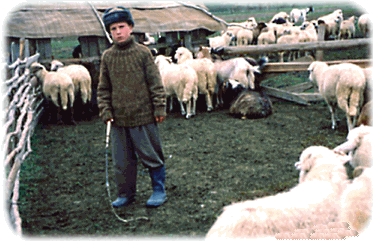
still used to protecting livestock against predators, just as their
ancestors did throughout the centuries. Romania is one of the few places
in Europe where people and large carnivores co-exist in close proximity. Peter
Christoph Sürth, |
|
|||
| Today, this unique situation is threatened.
Socio- economic conditions in Romania are changing dramatically and
consequently, a tremendous impact on the perpespectives of large
carnivores in probable. Privatisation of forests might destroy. The
number of hunters is increasing. The difficult economic situation will
be problematical for livestock breeders to investigate into new
preventive measures against the carnivores - e.g. electrical railings -
from own resources. |
The research component of engagierer animal and game animal managers provides the basis for further wildlife management decisions and supports the conversion of different preventive measures, in particular, in order to reduce conflicts between sheep holding and carnivores. | |||
Population
of carnivores in Europe:
![]() |
||||
| © Danube pictures Bernd Fetthauer, Diedorf-Anhausen/Germany | ||||