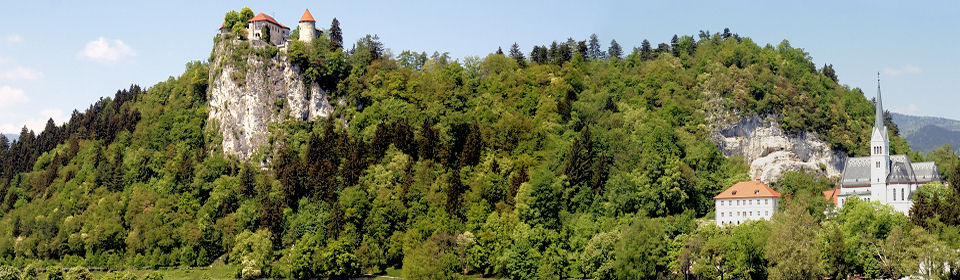
Slovenia, formerly part of Yugoslavia, was one of the first new countries to become independent after the breakdown of communism in eastern Europe. Its economic and political development since state foundation in 1991 has been very favourable. Slovenia became a member state of NATO and the European Union. The borders with the neighbouring EU-countries Italy, Austria and Hungary are open, only at the border with Croatia travel documents are checked. The Slovenian currency is the Euro. Slovenians speak their own - very complicated - southern Slavic language but at least among the younger population it is easy to find somebody who can communicate in English.
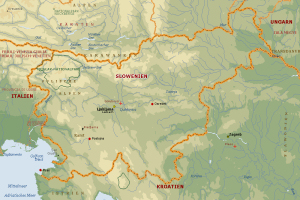 With only about 20 000 km², Slovenia is a small country. Nevertheless, it offers a surprising range of different landscapes, the mountain ranges of the Alps in the north with the almost 3000 m high "national mountain" Triglav, the beautiful karst region with its maze of hills, caves and gorges in the centre of the country, the warm Mediterranean region in the south and the Pannonic plain in the east. Slovenia has a population of just over 2 million and an average population density of 100 inhabitants per square kilometer. However, the population is concentrated in the few big cities and at the coast, which leaves a lot of free space for nature. Slovenia is to 58% forested, one of the highest percentages in Europe. Wildlife that has become rare or extinct in other European countries still can be observed in Slovenia, including the large predators bear, wolf and lynx.


